
Which material is most suitable for your project? Comparing properties, benefits and uses.
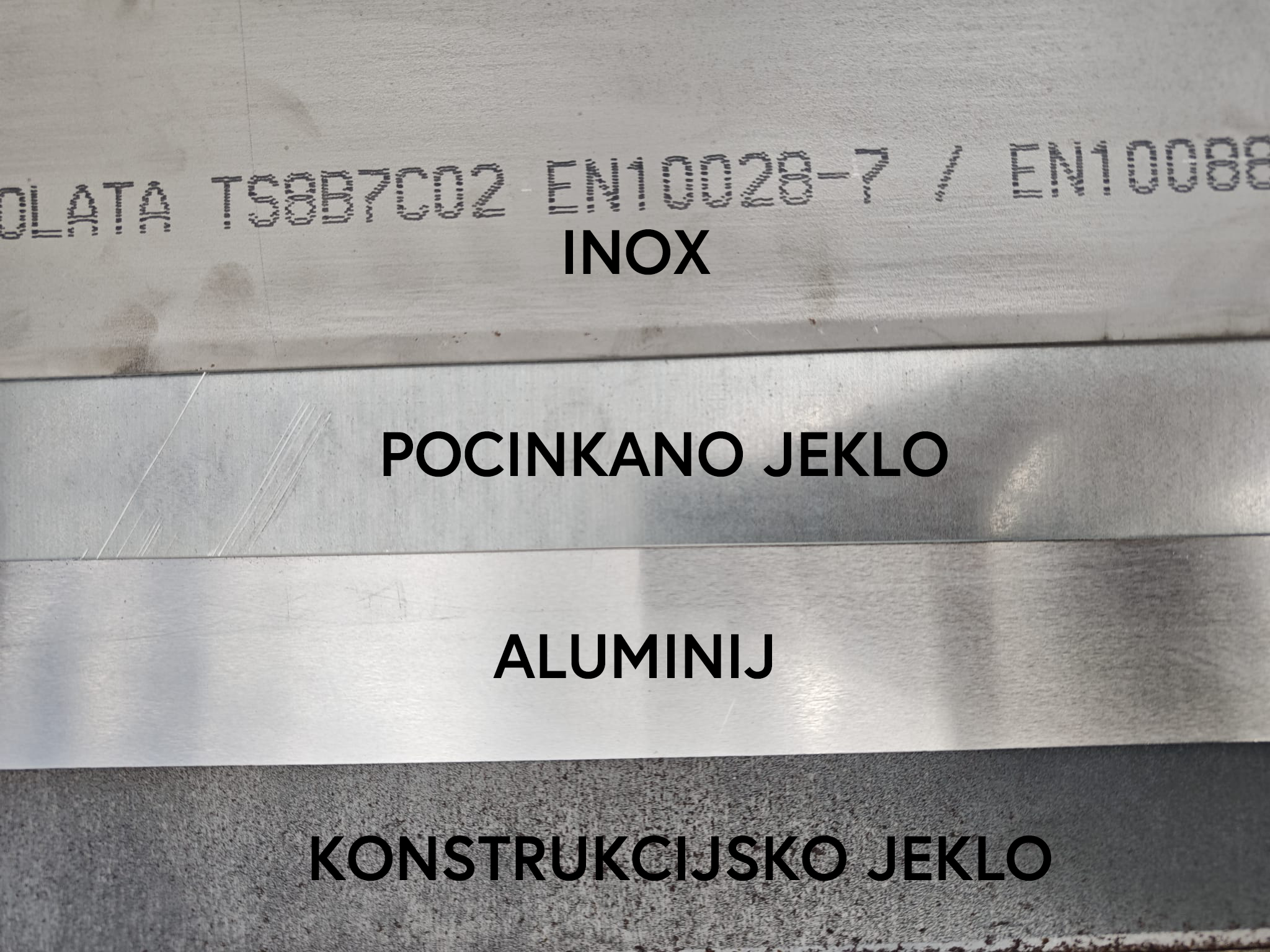
When designing metal products - whether a fence, a structure or a canopy - choosing the right material is crucial. Stainless steel (inox), aluminium and galvanised steel are among the most commonly used. In this article we compare their properties, advantages and disadvantages to help you decide.
INOX
Inox (stainless steel) is an alloy steel with chromium added to give it excellent corrosion resistance. This means that it is steel to which the element chromium has been added during manufacture - usually in quantity at least 10,5 %. Such steel is called alloy steelbecause it contains additives (alloying elements) that improve its properties. The most commonly used types are AISI 304 - "standard inox" and AISI 316 - "marine inox" (also suitable for marine environments).
Benefits:
- High resistance to rust and weathering,
- a look of elegance,
- contemporary aesthetics (satin or gloss),
- minimum maintenance.
Disadvantages:
- higher price compared to other materials,
- more difficult to machine without the right tools.
Application example: external fences, public buildings, food industry
ALUMINIUM
Aluminium is light, soft and has excellent corrosion resistance - especially when anodised. Its low weight and good strength-to-weight ratio make it a popular material in construction, industry and architecture. It is suitable for many decorative and functional elements such as fences, window frames, facade cladding, canopies and even structural systems for solar panels. Its surface is easily machined and the anodising process further extends its service life and allows aesthetic flexibility with different colours and finishes.
Benefits:
- extremely light (about a third of the weight of steel)
- natural corrosion resistance,
- good workability and recyclability.
Disadvantages:
- softer material - easier to deform,
- lower load-bearing capacity compared to steel,
- less suitable for heavy structures.
Example of use: balcony railings, light canopies, decorative elements.
GALVANISED STEEL
Galvanised steel is conventional steel that is protected by a layer of zinc (hot-dip galvanising or galvanising), which gives it additional corrosion resistance. The zinc layer acts as a protective barrier, preventing the steel from coming into contact with moisture and oxygen, while also offering cathodic protection - i.e. the zinc "sacrifices" itself, thus protecting the base metal from rust. This property enables galvanised steel to last a long time, even in outdoor and harsh environments. It is mainly used where strength, durability and a good price/quality ratio are important.
Benefits:
- low price, good strength and load-bearing capacity,
- long service life if the galvanising is of good quality.
Disadvantages:
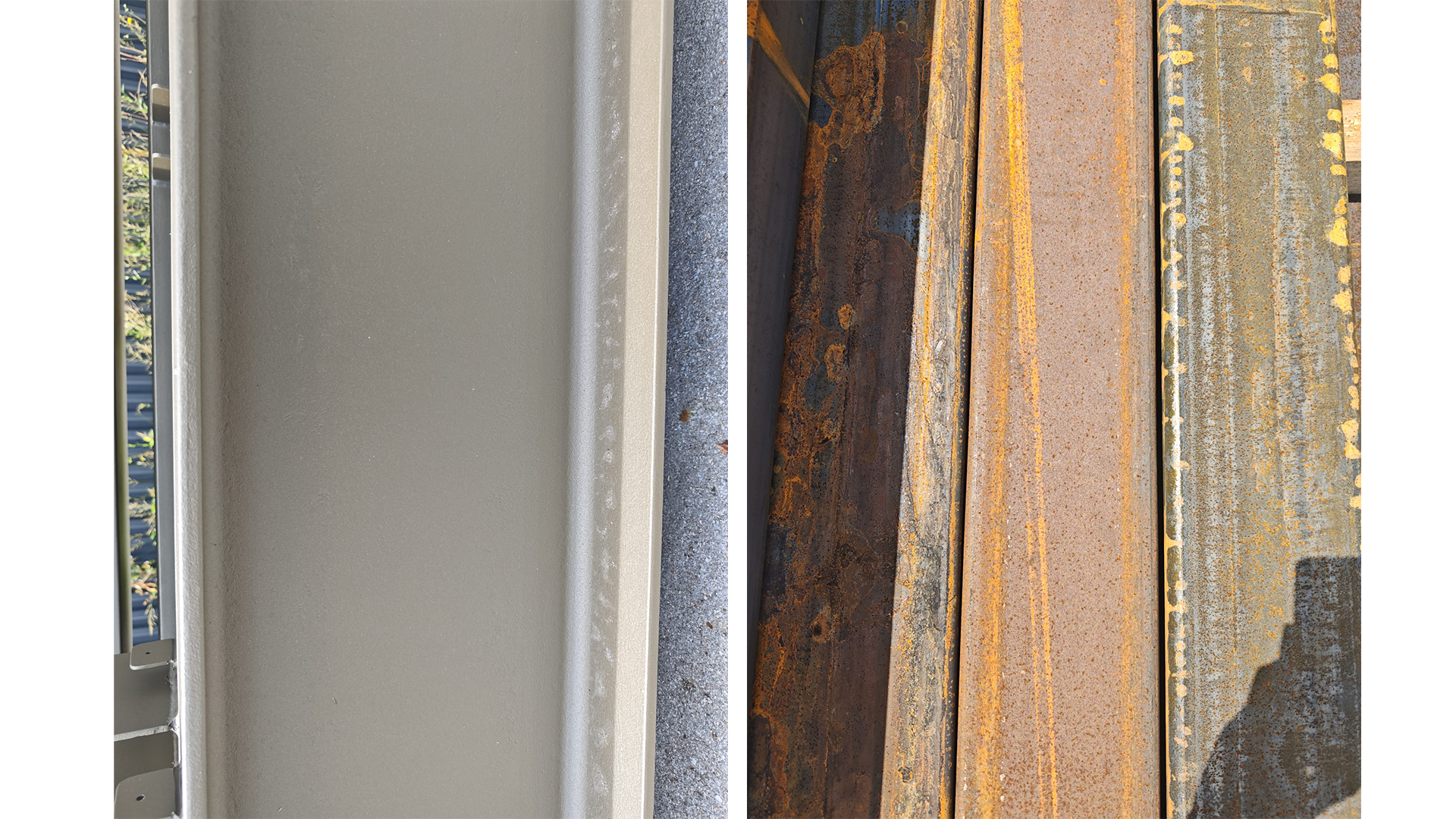
- less resistant than inox - zinc wears out over time,
- possible white rust (zinc corrosion),
- a visually less sophisticated look.
Example of use: structures, fences, load-bearing elements.
Comparison table
| Feature | Inox (AISI 304/316) | Aluminium | Galvanised steel |
| Corrosion resistance | ⭐⭐⭐⭐ (very high) | ⭐⭐⭐ (high) | ⭐⭐ (medium) |
| Price | 💰💰💰💰 | 💰💰💰 | 💰💰 |
| Toughness | ⭐⭐⭐⭐ | ⭐⭐ | ⭐⭐⭐⭐ |
| Weight | ⚖️⚖️⚖️⚖️ | ⚖️ (can) | ⚖️⚖️⚖️ |
| Maintenance | 🔧 (low) | 🔧 (low) | 🔧🔧 (medium) |
What to choose?
For a modern look and maximum durability, choose stainless steel.
For lightweight, simple constructions, aluminium is an excellent choice.
For robustness and economy, galvanised steel is a reliable solution.
Choosing the right material always depends on the location, the intended use, aesthetic requirements and budget. At Metallmar d.o.o. we are happy to advise and assist you in choosing the material that will best suit your project. Contact us for a free consultation or quotation!
 English
  Slovenščina
  Deutsch (Sie)