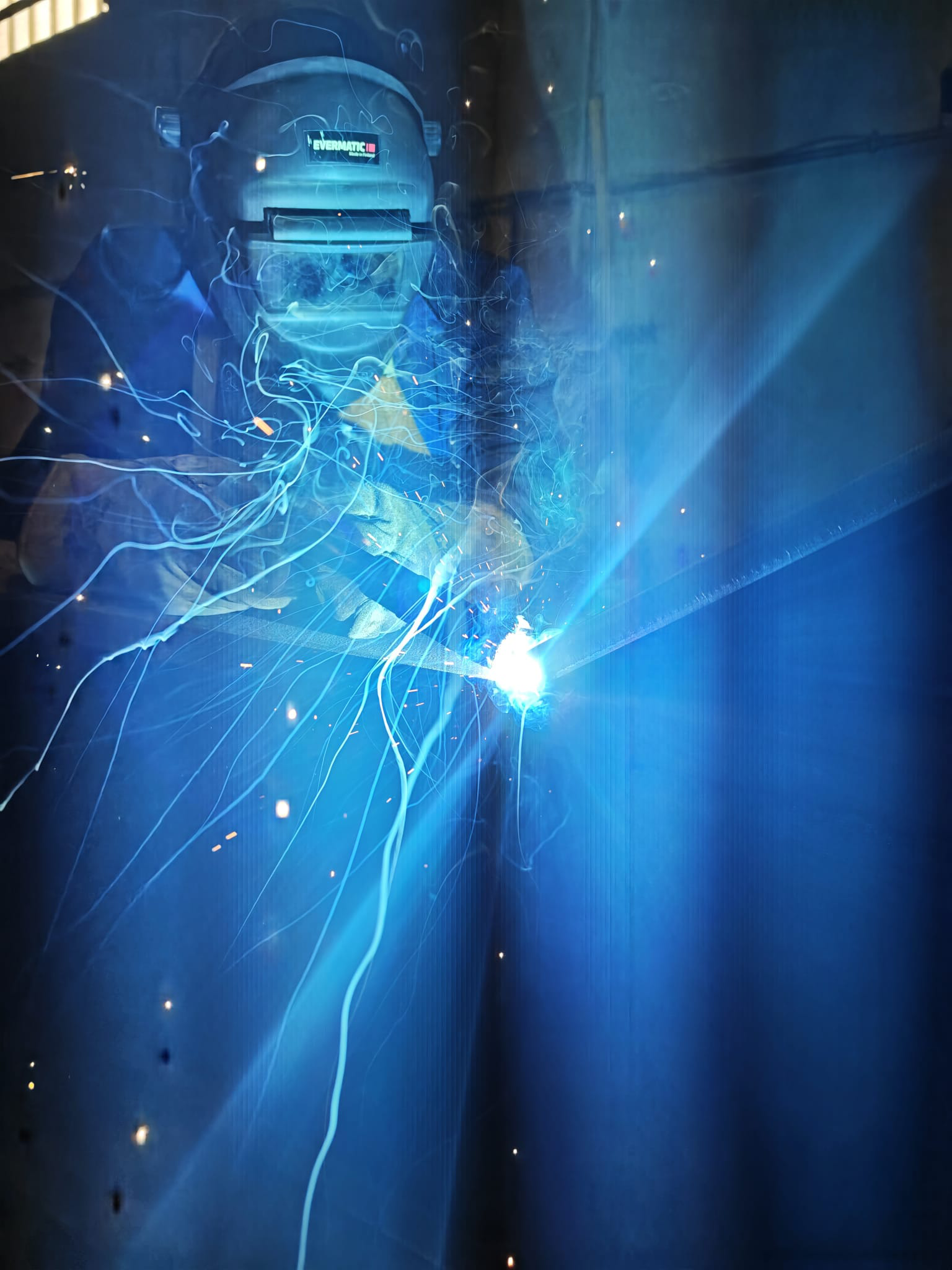

Welding is an indispensable process in the metal industry, where a quality weld ensures the strength and longevity of products. The most common welding processes include TIG welding, MIG/MAG welding, laser welding and electric welding. In this article, we will look in more detail at these methods, their advantages, disadvantages and examples of use.
TIG welding - precision and weld quality
TIG welding (Tungsten Inert Gas) is known for its precise control and clean welds. It uses a non-fusible tungsten electrode and an inert gas (most commonly argon) to protect the weld zone from oxidation. Its precision makes TIG welding ideal for welding thin and difficult materials such as stainless steel, aluminium and copper.
Advantages of TIG welding:
- High weld quality and precision
- Suitable for thin materials
- No contamination and oxidation
Disadvantages of TIG welding:
- A slower process
- Experienced welder needed
- Higher equipment costs

MIG/MAG welding - speed and versatility
MIG/MAG welding is a commonly used method where the fusible wire is fed directly into the weld joint protected by an inert (MIG) or active (MAG) gas. This method allows large areas to be welded quickly and efficiently.
Advantages of MIG/MAG welding:
- High productivity
- Simpler welding technique
- Suitable for thicker materials and batch production
Disadvantages of MIG/MAG welding:
- Wind sensitivity (need for sheltered space)
- More spraying and cleaning after welding
- Less precise than TIG

Laser welding - modern technology for precision welded joints
Laser welding uses a powerful laser beam to melt metals, resulting in very narrow and deep weld joints with minimal thermal deformation. This method is fast and widely used in the automotive, electronics and medical engineering industries.
Benefits of laser welding:
- Extremely fast implementation
- High accuracy and repeatability
- Minimum heat load of the material
Disadvantages of laser welding:
- High initial investment
- Requires meticulous preparation and equipment
- Particularly suitable for specific industrial applications

Electric welding - the classic process for different applications
Electric welding or manual arc welding, uses a coated electrode that forms a shielding gas and slag during welding. It is a popular process because of its simplicity and affordability.
Benefits of electric welding:
- Affordable equipment
- Easy to use even in the field
- Useful for thicker materials and structures
Disadvantages of electric welding:
- More smoke and slag
- Not suitable for thin materials
- Requires additional cleaning after welding
Which welding method is best?
Choosing the right welding process depends on the specific needs of the project, such as material type, thickness, required weld quality, lead time and cost. TIG welding is best suited for precise and aesthetic welds, MIG/MAG for fast and efficient welding of large surfaces, laser welding for high technology and precision, and electric welding for robust and cost-effective work.
Knowledge of the different welding processes is key to the successful execution of projects in the metal industry. Whether you are looking for precision, speed or economy, there is a suitable technique for your needs.
 English
  Slovenščina
  Deutsch (Sie)